
Music, Community and Tradition
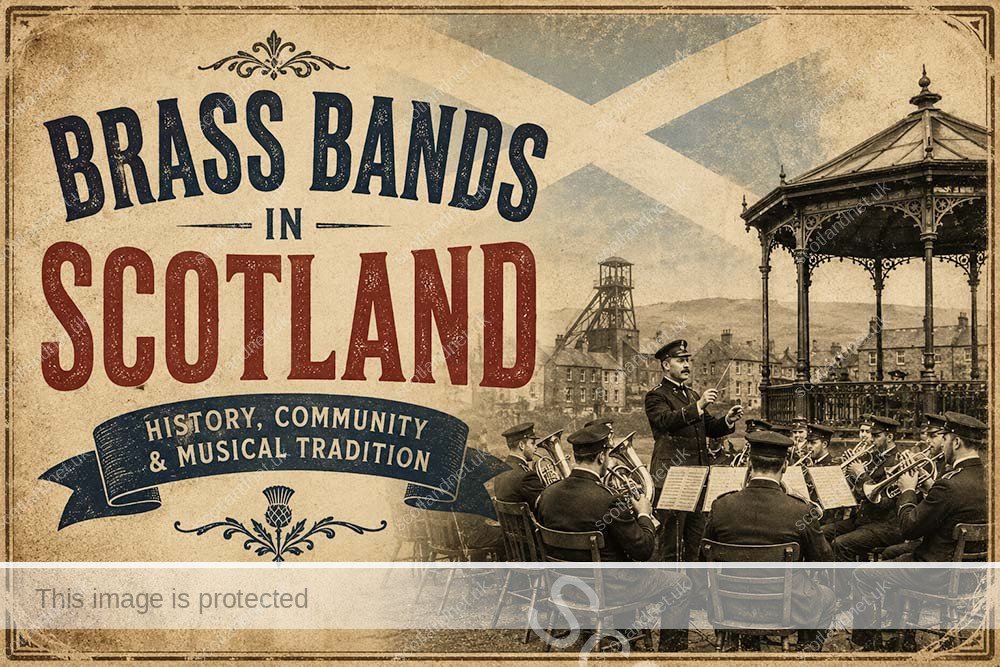
All over Scotland, you can still hear brass bands playing in town squares, at village gala days, remembrance services, church halls, parks, and contests.
From old mining communities in Lanarkshire and Fife to civic bands in towns and cities, brass bands are one of Scotland’s longest-lasting musical traditions. They are not just about performance; they are also community institutions and a living part of social history.
Although brass bands are often linked to industrial Britain, those in Scotland have their own unique identity. Local communities, religious traditions, working-class culture, and civic pride have all shaped them. Today, people of all ages still join brass bands, helping to keep a musical tradition alive that goes back more than 150 years.
The Rise of Brass Bands in Scotland
Brass bands grew more popular in the 19th century, especially during the Industrial Revolution. As Scotland’s coal mines, steelworks, shipyards, mills, and engineering industries grew, organised activities for workers also increased.
Employers, churches, temperance groups, and local organisations often helped start bands. Since instruments were costly, bands usually needed support from factories, mines, or wealthy donors. In exchange, bands became symbols of local pride and status.
Mining communities especially built strong brass band traditions. In towns throughout Ayrshire, Fife, West Lothian, Lanarkshire, and the Lothians, brass bands became a key part of social life. Competitions, parades, concerts, and gala days helped people feel connected and part of something bigger.
The brass band movement also reflected Victorian values like self-improvement and discipline. Learning music was considered educational, respectable, and good for society. For many working-class Scots, brass bands gave chances to travel, achieve, and express themselves in ways they might not have had otherwise.
More Than Music
In Scotland, brass bands have almost never been only about the music.
For generations, bands have played a big role in community life. They lead parades, perform at remembrance ceremonies, take part in civic events, and entertain people at local festivals. In smaller towns, the local band often became a key part of the community’s identity.
Some bands were linked to churches, while others started in workplaces or through local councils. Youth training bands introduced children to music early on, often leading to lifelong friendships and even musical careers.
Even now, many Scottish brass bands run as charities or volunteer groups. Rehearsals, fundraising, competitions, and concerts help keep strong ties between generations. Sometimes, grandparents, parents, and children all play in the same band.
Contesting Tradition
Competing in brass bands is still a big part of the culture.
Scottish bands often take part in regional and national championships. The best bands go on to the well-known UK National Brass Band Championships and even international events. Competing in these contests takes great skill, discipline, and teamwork.
Over the years, some Scottish bands have become known internationally. The Whitburn Band is especially famous and is seen as one of Scotland’s top brass bands. Other well-known bands include The Cooperation Band and Kingdom Brass.
Band competitions can be intense, with judges looking at tone, precision, balance, interpretation, and overall musical quality. Still, there is a strong sense of friendship and support between bands and their communities.
Aberdeenshire and Moray
- Bon Accord Silver Band – Aberdeen – Scottish Championship Section Third Place 2015.
- Deveron River Brass – Banff – Formed in April 2009.
- Granite City Brass – Aberdeen – Established in 1850.
- Keith & District Silver Band
- Moray Concert Brass – Elgin
Angus and Dundee
- Arbroath Instrumental Band
- City of Discovery Band
- Granite City Brass – Aberdeen – Established in 1850.
- Tayport Instrumental Band
Edinburgh & Lothians Brass Bands
- Bathgate Band
- Bo’ness & Carriden Brass Band
- Broxburn and Livingston
- Dalkeith and Monktonhall
- Edinburgh Brass Band
- McTaggart Scott – Loanhead
- McTaggart Scott – Loanhead
- Newland Concert Brass – Bathgate
- Newtongrange Silver Band
- St David’s Brass – Dalkeith
- Unison Kinneil Band – Bo’ness
- Whitburn Band
Fife Brass Bands
- Buckhaven and Methil Miners Band
- Dunfermline Town Brass Band
- Dysart Colliery Silver Band
- Kingdom Brass
- Lochgelly Band
- Tullis Russell Mills Band – Markinch, Glenrothes
Scottish Borders & Dumfries and Galloway
West and Central Scotland
- Barrhead Burgh Band
- Campbeltown Brass
- Clackmannan District Brass Band
- The Coalburn Brass Band Family – South Lanarkshire
- Dalmellington Band
- Dunaskin Doon Band
- Brass Sounds Inverclyde
- Johnstone Band – a First Section Brass Band based in Johnstone, near Glasgow.
- King’s Park Brass – Keeping brass alive in Glasgow
- Kirkintilloch Band
- Newmilns & Galston
- Renfrew Burgh Band
Scottish Brass Band Organisations
The Sound of Scottish Community Life
Brass bands still play a big part in Scottish events year-round, and you may encounter them during gala days in small towns, summer concerts in public parks, Christmas performances in shopping streets, or at ceremonies related to remembrance and civic life. Their repertoire ranges from traditional marches and hymns to film music, classical arrangements, jazz, pop and contemporary compositions.
The sight of a brass band playing in a park bandstand is still a strong part of Scotland’s cultural memory. In many towns, these summer concerts continue to draw loyal local crowds.
Some performances have a special Scottish touch, as bands sometimes include traditional Scottish melodies, folk tunes, and patriotic songs in their programs.
Challenges and Renewal
Like many community groups, Scottish brass bands face new challenges today. Fewer industrial communities, higher costs, changing ways people spend their free time, and less music in schools have all made it harder to recruit and fund bands.
Still, many bands have found ways to adapt. Youth programs, community outreach, working with schools, and using social media have helped bring brass banding to new generations.
Some bands now play film scores, popular songs, and themed concerts along with traditional music to reach more people. Others have started recording projects and performing online.
Even with these challenges, the brass band movement in Scotland is still going strong. All over the country, volunteers keep rehearsal halls open, organise concerts, teach young musicians, and protect a tradition that has lasted through big social and economic changes.
A Living Scottish Tradition
Some people see brass bands as nostalgic reminders of Scotland’s industrial past, and they do bring to mind mining villages, shipyard towns, and Victorian civic pride. But brass bands are also living groups that keep changing and growing.
Most of all, Scottish brass bands stand for community. They unite people of all ages and backgrounds through making music together, sharing local identity, and working as a team.
Whether you hear them at a town gala, at remembrance services, or playing from a Victorian bandstand, brass bands are still part of Scotland’s soundtrack.
Brass Band Information
- 4 Bars Rest
- British Federation of Brass Bands
- The Brass Band Portal
- Brass Band World
- The British Bandsman
Categories
- Accommodation (1)
- Arts & Culture (14)
- Civic Life & Public Services (8)
- Food & Drink (1)
- History & Heritage (14)
- Landscape & Environment (9)
- Media & Broadcasting (6)
- Questions (10)
- Scottish Diaspora (3)
- Sport & Leisure (14)
- Travel (8)
- Visitor Guides (6)
Share this page.