
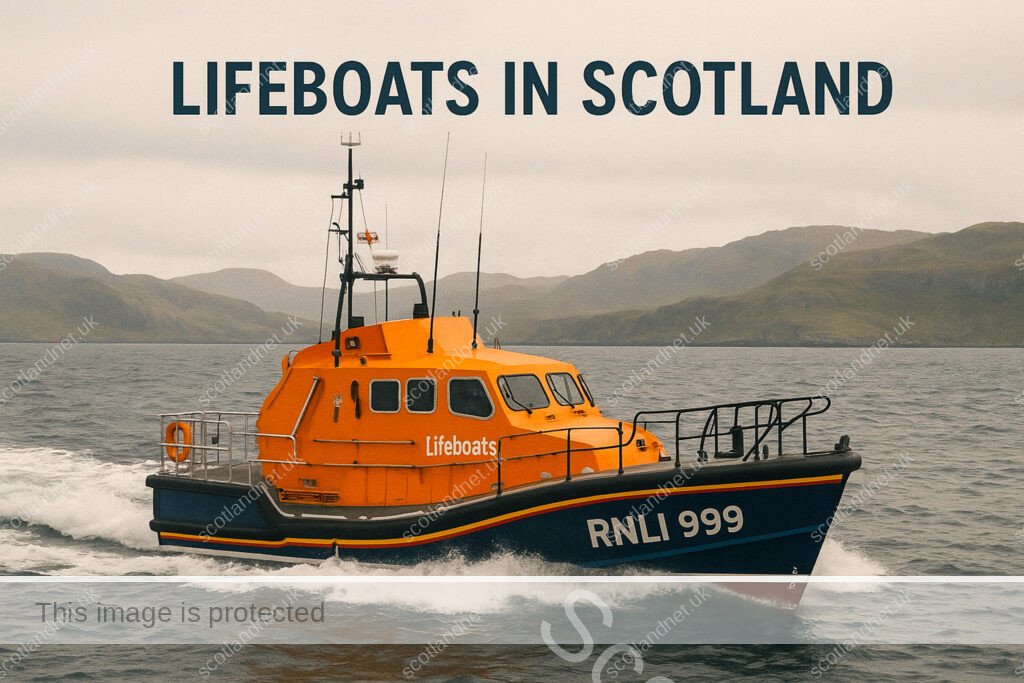
Scotland’s dramatic coastlines, rugged islands, and ever-changing seas have long demanded courage, resilience, and community spirit. Lifeboats are vital in this landscape, forming a crucial part of maritime safety and heritage. From the bustling harbours of the east coast to the remote shores of the Hebrides, lifeboat stations have saved lives for generations.
Dedicated volunteers staff them and brave the elements to help those in danger.
Origins & Historical Background
Scotland’s rich lifeboat tradition began in the early 19th century when dedicated local fishermen and harbour communities formed informal rescue teams. After its establishment in 1824, the Royal National Lifeboat Institution (RNLI) quickly set up stations across Scotland, improving maritime safety by deploying purpose-built boats and trained crews to high-risk coastal areas.
Over time, both RNLI and independent stations became fixtures of Scottish coastal life, often supported by the same families for generations.
Crews, Boats & How They Operate
Lifeboat crews in Scotland are almost entirely volunteers. They train regularly, respond at any hour, and work with coastguards, helicopters, and local emergency services.
Their boats range from powerful all-weather lifeboats that can handle open-sea storms to inshore vessels designed for fast response near beaches, rocks, and harbours. Every launch — whether a real emergency or a search call-out — relies on teamwork, skill, and deep local knowledge.
Cultural Significance
Lifeboat stations are focal points for coastal communities. Their open days, gala events, and fundraising efforts bring people together, while rescue stories become part of local folklore.
The lifeboat service also symbolises resilience, compassion, and maritime tradition. Many towns consider the crew a ” family,” and the sight of a lifeboat launching still draws people to the harbour railings.
Lifeboats Today
Scotland has 46 RNLI stations, along with several respected independent lifeboat services. Crews continue to rescue fishermen, kayakers, swimmers, walkers, and even pets.
Modern technology — including radar, GPS, and fast-launch slipways — works in tandem with centuries-old seamanship and community support. The service runs entirely on donations.
Where to See or Learn More
Visitors can often tour lifeboat stations or see boats launching during training days. Harbours in towns like Tobermory, Anstruther, Oban, St Abbs, Lerwick, and Stonehaven are excellent places to explore Scotland’slifeboat heritage.
This page brings information about past and present lifeboat stations throughout Scotland, including the Royal National Lifeboat Institution (RNLI) and independent services. Whether you’re tracing the history of sea rescue, supporting a local crew, or planning a visit to a lifeboat station, you’ll find links, stories, and resources that highlight the ongoing importance of lifeboats in Scotland’s maritime communities.

Royal National Lifeboat Institution—The RNLI is a charity that provides a 24-hour lifesaving service in the UK and the Republic of Ireland.
Volunteer crews give up their time and comfort to carry out rescues in complex and often dangerous conditions.
Lifeboat Stations in Scotland
- Aberdeen Lifeboat – Established in 1802
- Anstruther Lifeboat – Founded in 1865
- Arbroath Lifeboat – Saving lives since 1803
- Arran Lifeboat
- Isle of Barra Lifeboat – The Barra lifeboat station was established in 1931
- Broughty Ferry Lifeboat
- Buckie Lifeboat
- Campbeltown Lifeboat Station – Established in 1861
- Dunbar Lifeboat – Established in 1808 – Dunbar Lifeboat Station is also on Twitter
- Eyemouth Lifeboat has been serving the bustling fishing port of Eyemouth since 1876.
- Girvan Lifeboat
- Helensburgh Lifeboat provides vital support and assistance in the upper Firth of Clyde and the lower Clyde.
- Invergordon Lifeboat
- Kessock Lifeboat
- Kinghorn Lifeboat – Established in 1965
- Kippford Lifeboat plays a vital role in coastal safety from the charming village of Kippford in Dumfries and Galloway.
- Kirkcudbright Lifeboat
- Kirkwall Lifeboat
- Kyle of Lochalsh Lifeboat
- Largs Lifeboat – Firth of Clyde
- Lerwick Lifeboat
- Loch Ness Lifeboat – A team of volunteers living in and around Drumnadrochit runs the Loch Ness rescue boat.
- Lochinver Lifeboat
- Macduff Lifeboat
- Mallaig Lifeboat – The most westerly lifeboat station on the British mainland.
- Montrose Lifeboat
- North Berwick Lifeboat
- Oban Lifeboat
- Peterhead Lifeboat
- Portpatrick Lifeboat
- Portree Lifeboat, Isle of Skye – established in 1991.
- Queensferry Lifeboat – one of Scotland’s busiest inshore lifeboat stations.
- Stranraer Lifeboat
- Stonehaven Lifeboat
- Stornoway Lifeboat
- Stranraer Lifeboat
- Stromness Lifeboat
- Thurso Lifeboat
- Tighnabruaich Lifeboat, Argyll and Bute.
- Tobermory Lifeboat
- Troon Lifeboat
- Wick Lifeboat
Lifeboat Information
The Lifeboat Enthusiasts’ Society brings together those keen to support the RNLI. It provides an exchange of information between the RNLI and members on the many aspects of lifeboats, past, present, and future.
The Lifeboat Station Project
The Lifeboat Station Project – Jack Lowe’s Epic Mission to Photograph 238 RNLI Lifeboat Stations on Glass.
Excellent film by Sean Tucker on The Lifeboat Station Project
Share this page.
Search