
Who was Robert Burns?
Robert Burns (1759-1796), known as “Rabbie Burns,” is Scotland’s national poet. Born in Alloway, Ayrshire, Burns lived a life that intertwined with the struggles of his time.
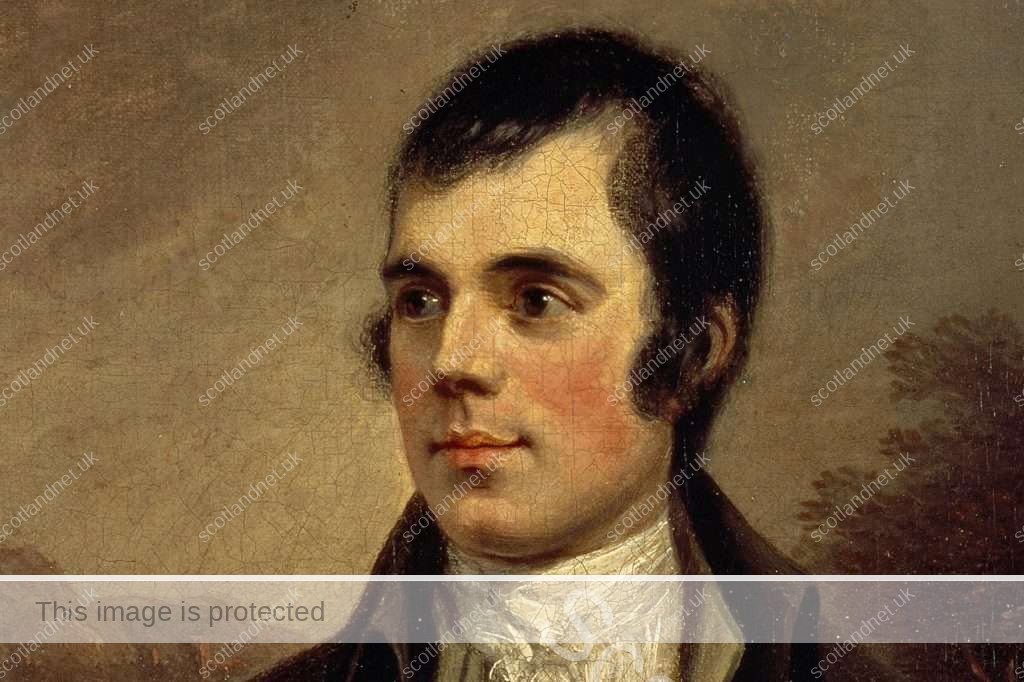
Raised in a humble farming family, Burns’s early years were shaped by rural Scotland’s traditions, which he celebrated in his works. Burns’s poetry resonates with themes of love, nature, and social justice, earning him recognition in Scotland and globally.
A Life Captured in Verse
Despite his short life, Burns left an indelible mark on Scottish culture. After taking up the pen to write about his life experiences, his poetry gained widespread popularity. His works gave voice to the poor and working-class Scots, reflecting their joys, challenges, and aspirations. Many of Burns’s writings still speak to contemporary social issues, highlighting his timeless appeal.
Famous Works
Burns’s literary output is vast, but certain works stand out. These include:
Auld Lang Syne – Perhaps his most famous work, often sung at New Year’s Eve celebrations across the globe.
- Tam o’ Shanter – A vivid, humorous narrative poem that tells the story of a man’s terrifying encounter with witches. The poem is famous for its depiction of Scottish folklore and has become a staple of Burns’s legacy.
Address to a Haggis – A poem paying tribute to Scotland’s national dish, often recited during Burns Night celebrations.
To a Mouse – A poignant poem reflecting on the human condition, it explores the fragility of life and our relationship with nature.
Robert Burns – Exciseman
In addition to his poetry, Burns had a practical side: he worked as an exciseman (a tax collector) for the British government. This role involved inspecting and enforcing whisky taxes, and Burns’s time as an exciseman was not without controversy. His knowledge of the rural communities he served made him aware of the struggles faced by ordinary people. This experience found its way into his poems, often criticising the class system and societal injustices.
Worldwide Appeal
Robert Burns still has a strong influence worldwide. His poems have been translated into many languages, connecting with people from different backgrounds. Burns’s focus on equality, freedom, and social justice makes his work important not just in Scotland but around the world.
One of the clearest signs of Burns’s global legacy is the many statues dedicated to him around the world.
From Edinburgh to New York, and from Toronto to Sydney, these statues honour his influence. They remind us of his literary achievements and the universal themes he explored. Some well-known monuments are the Robert Burns Monument in Edinburgh, the Burns Memorial in Dumfries, and the Burns Statue in Central Park, New York.
Stamps in His Honour
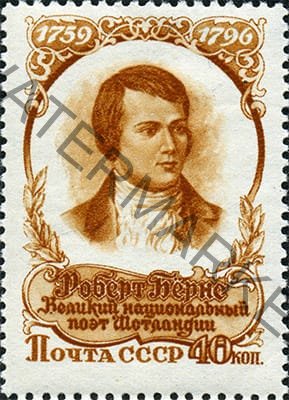
Robert Burns’s international reputation reached philately when, in 1959, Russia became the first country to issue a commemorative stamp for his 200th birthday. Featuring his portrait, the stamp marked a key milestone in his global recognition.
The UK did the same ten years later, releasing a special stamp in 1969 to celebrate the 210th anniversary of Burns’s birth. Even though Burns was born in Scotland, Russia was the first to honour him with a stamp, showing how far Burns’s influence reached beyond Scotland and Britain.
Places to Visit and Explore Burns’s Legacy
For those interested in learning more, visiting key locations tied to Burns’s life is a perfect way to connect with his legacy. Some notable sites include:
- Robert Burns Birthplace Museum, Alloway – This museum and the nearby Burns Cottage, where he was born, offer visitors a glimpse into his early life and the environment that inspired many of his works. The museum also features the famous Auld Kirk and Burns Monument.
- Brig o’ Doon – A 15th-century bridge featured in Burns’ poem Tam o’ Shanter, where Tam’s horse escapes a pursuing witch.
- Auld Kirk of Alloway – The ruins of this old church are a key setting in Tam o’ Shanter. Burns’ father, William Burnes, is buried here.
- Bachelor’s Club – In this 17th-century house in Tarbolton, Ayrshire, Scotland’s national bard, Robert Burns, learned to dance, founded a debating club and became a Freemason. The Bachelor’s Club is cared for by the National Trust for Scotland.
- Burns House Museum – Burns lived here with his wife, Jean Armour, and wrote many poems. The museum contains memorabilia and displays about his life in Mauchline.
- Robert Burns Ellisland Museum & Farm – Burns leased this farm and lived with his family from 1788 to 1791. It is where he wrote many of his most famous works, including Auld Lang Syne.
- Robert Burns House – Burns spent the final years of his life in this modest house in Dumfries. It is now a museum showcasing his personal belongings and manuscripts.
- St. Michael’s Churchyard – Burns is buried here in a mausoleum that serves as a pilgrimage site for fans of his work.
- The Globe Inn, Dumfries – Established in 1610, The Globe Inn, Dumfries has long been associated with Scotland’s national poet. In 1796, Burns wrote: “… the Globe Tavern here, which these many years has been my Howff …”, and in 1819, the first of what was to become the annual tradition of Burns Suppers was held here at The Globe Inn in Dumfries, south-west Scotland.
- Robert Burns World Federation promotes and celebrates the life and works of Robert Burns and Scotland’s heritage, language, and culture.
Burns Clubs in Scotland
- Alamo Burns Club – Paisley
- Alexandria Burns Club – Founded 1884.
- Bridgeton Burns Club – Founded in 1870.
- Dalry Burns Club – the longest, continuous record of anniversary dinners in the world.
- Dumbarton Burns Club – “On the evening of 25th January 1859 a party of 26 admirers of our national bard sat down to dinner in the Elephant Hotel, High Street, Dumbarton : and so began Dumbarton Burns Club.”
- The Burns Howff Club – formed in the Globe Inn, Dumfries, south-west Scotland in 1889, and meets on the 25th January each year to celebrate the anniversary of the birth of Robert Burns in 1759 with a “Burns Supper”.
- Greenock Burns Club – Instituted in 1801, it is the oldest Burns Club in the world and is known as “The Mother Club” – Greenock Burns Club on Facebook
- Irvine Burns Club – The club has an unbroken history dating back to its formation on 2nd June 1826. Of the twelve founding members of the club five were known to Robert Burns, two of whom were close friends of the poet.
- Paisley Burns Club – Founded on 29th January 1805.
- Perth Burns Club – instituted on 8th February 1873.
Burns Clubs in Canada and the USA
- Robert Burns Association of North America – RBANA is an association dedicated to the preservation and appreciation of the life, works and philosophy of Robert Burns, Scotland’s National Bard.
- Calgary Burns Club – fosters an interest in Scottish literature, art and music by sharing its talents with the community and through support of events involving Scottish cultural activities.
- Halifax Burns Club – “Our organization is based on the Tarbolton Bachelors’ Club founded by Burns. Like the original club, we seek to be “a diversion for the weary man worn down by necessary labours of life”
- Medicine Hat Burns Club – Established in 2008
- Robert Burns Society of the Midlands – Columbia, South Carolina
- The Robert Burns Club of Milwaukee
Robert Burns Information
- Robert Burns – Family History
- Robert Burns – by The BBC
- Robert Burns – by the Gazetteer for Scotland
- Robert Burns – by The National Library of Scotland
Categories
- Accommodation (1)
- Arts & Culture (14)
- Civic Life & Public Services (8)
- Food & Drink (1)
- History & Heritage (14)
- Landscape & Environment (9)
- Media & Broadcasting (6)
- Questions (10)
- Scottish Diaspora (3)
- Sport & Leisure (14)
- Travel (8)
- Visitor Guides (6)