Shinty (Scottish Gaelic: camanachd) is one of Scotland’s oldest sports. It’s a community game deeply rooted in Highland culture, with a history that stretches back over a thousand years. Traditionally played in glens and townships, it evolved from older stick games that may have shared ancestry with Irish hurling.
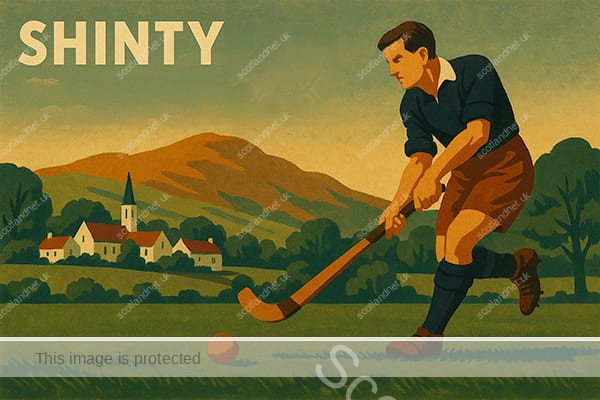
The sport is played outdoors on grass, typically on a pitch of a similar size to a football field. Each player uses a camán, a curved wooden stick, to control, pass, and strike the ball. Unlike field hockey, players can play the ball in the air, and tackling is allowed, which makes the game quick, physical, and very exciting to watch.
Teams and Leagues
The Camanachd Association governs Shinty.
The game is strongest in the Highlands and West Coast, with famous clubs including:
The main competition is the Mactavish Cup and the Camanachd Cup, sometimes referred to as the “Scottish Cup of Shinty” — the biggest prize in the sport.
There are also:
- National leagues (Premier and lower divisions)
- Youth and women’s competitions
- Local six-a-side summer tournaments
Shinty’s Connection to Hurling
Shinty has a special relationship with Irish hurling. Every year, Scotland and Ireland play an international composite rules match, using a blend of both sports’ rules. It’s one of the most unique international fixtures in world sport.
Where is Shinty Most Popular?
Shinty is strongest in:
- The Highlands
- Lochaber
- Skye
- Argyll
- Badenoch and Strathspey
However, the game has been growing again in cities, universities, and youth programmes — helped by cultural pride and excellent community coaching.
Why Does Shinty Matter?
Shinty is more than a sport — it reflects:
- Gaelic heritage
- Community identity
- Tradition
- Local pride and connection to place
It’s a reminder that Scotland’s sporting culture is broader than football and rugby — and deeply rooted in landscape and history.