
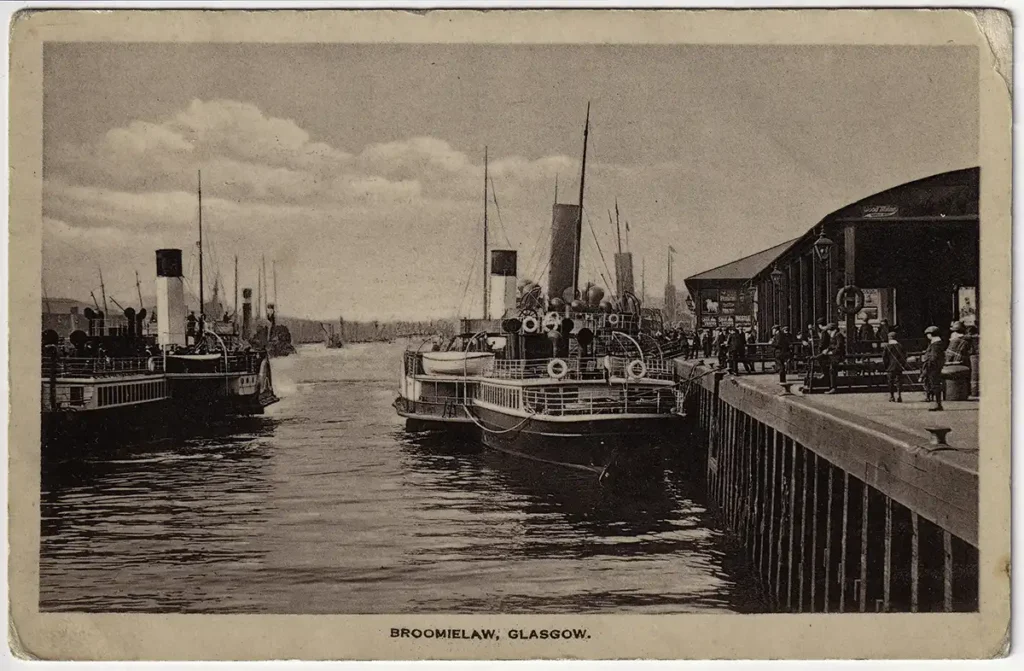
Broomielaw: Once the beating heart of maritime Glasgow, this was where steamers puffed their way up the Clyde, docking amid a throng of porters, passengers, and hopeful emigrants. This stretch of riverfront, just west of the city centre, was more than a quay – it was a portal.
This postcard of the Broomielaw showcases the architectural features of the wharves and bridges and captures the bustling energy, trade, and interconnection that defined Glasgow during its industrial peak.
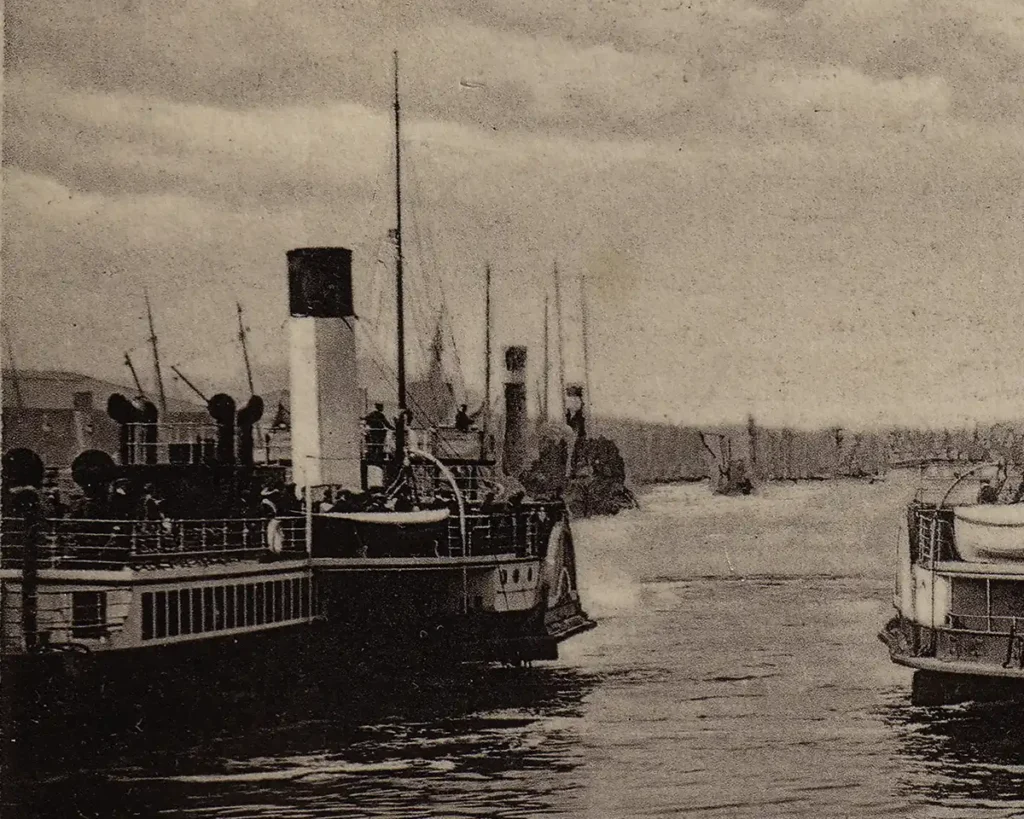
In the 19th and early 20th centuries, thousands boarded steamers here bound for Rothesay, Arran, or the Kyles of Bute, while others stepped aboard ocean liners headed for Canada or the United States. For many, a wave at the Broomielaw was a last farewell to Scotland. For others, it was the start of a summer escape “doon the watter.”
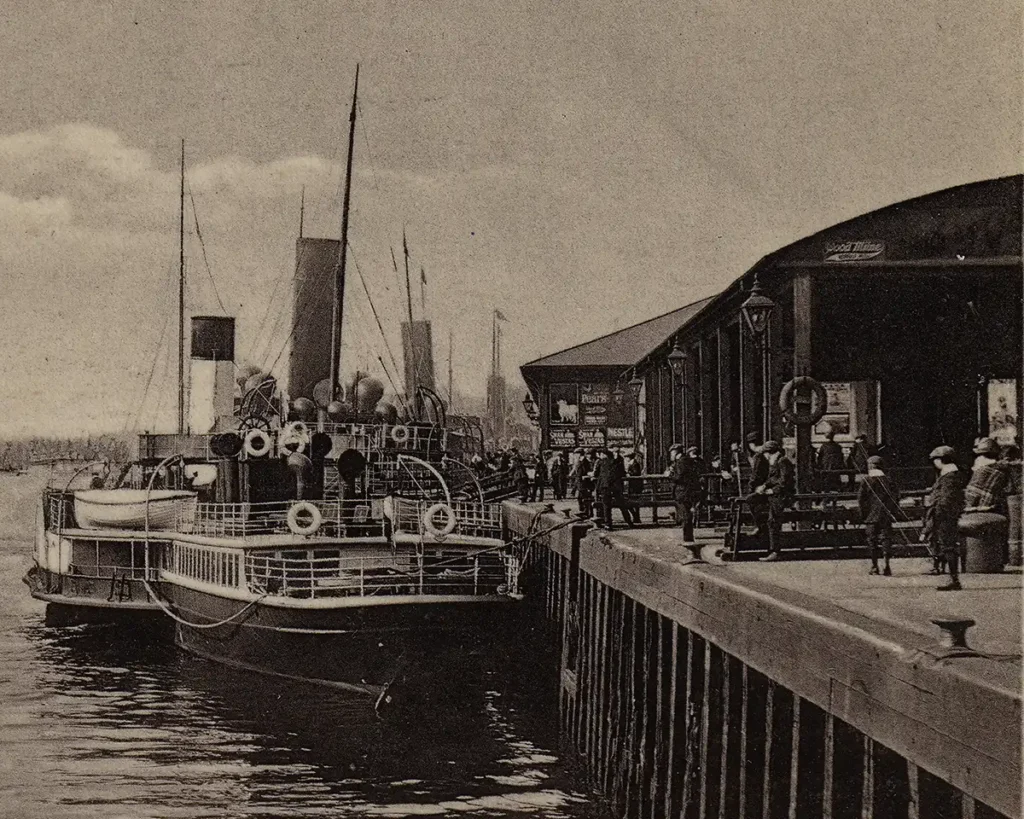
The Broomielaw may be quieter today, but its legacy endures in stone, story, and song. It’s immortalised in folk tunes and literature, and in this weathered postcard lies a whisper of steam whistles, cobblestones, and the clang of cranes.

Broomielaw Postcard Details
- Unposted
- Publisher – WR&S Reliable Series
- Date: around 1900
History
The Broomielaw has been at the heart of Glasgow’s maritime history for more than three centuries. Originally, the name referred to a riverside meadow where broom shrubs grew along the banks of the River Clyde.
During the 17th and early 18th centuries, the Clyde was too shallow for large ships to reach Glasgow, forcing merchants to rely on smaller vessels or transfer cargo at ports further downstream such as Port Glasgow. As Glasgow’s trade expanded, particularly through the booming tobacco and sugar trades with the Americas, the city invested heavily in improving the river. Under the direction of engineer John Golborne, and later Thomas Telford, the Clyde was deepened, straightened and dredged, transforming it into a navigable waterway capable of accommodating much larger vessels.
By the 19th century, the area had become one of Britain’s busiest inland ports and the commercial heart of Glasgow’s waterfront. Steamers departed daily for towns around the Firth of Clyde, earning Glasgow the nickname “Second City of the Empire.”
The quays bustled with passengers, cargo ships and river traffic, while nearby warehouses, shipping offices and railway connections made the area a vital centre of commerce. The Broomielaw also became closely associated with Scottish emigration, as thousands of people began their journeys overseas from the Clyde’s quays before larger ocean liners later sailed from terminals further downriver.
Although commercial shipping has long since declined, the Broomielaw remains an important reminder of Glasgow’s maritime heritage. Today, modern offices, riverside walkways and striking landmarks such as the Clyde Arc bridge overlook a waterfront that played a central role in the city’s rise as one of the world’s great industrial and trading centres.
Share this page.
Search
Categories
- Accommodation (1)
- Arts & Culture (14)
- Civic Life & Public Services (8)
- Food & Drink (1)
- History & Heritage (14)
- Landscape & Environment (9)
- Media & Broadcasting (6)
- Questions (10)
- Scottish Diaspora (3)
- Sport & Leisure (14)
- Travel (8)
- Visitor Guides (6)