From Prehistoric Settlements to Contemporary Scotland
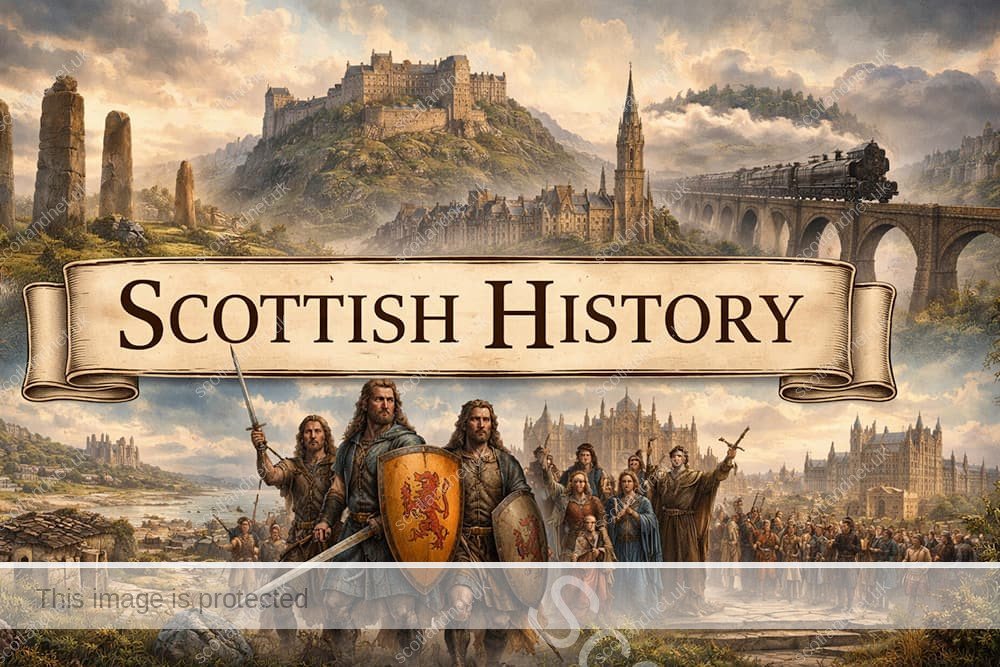
The history of Scotland extends over 10,000 years, beginning with the first hunter-gatherers who migrated after the retreat of the ice sheets and continuing to the political and cultural landscape of the present day. Over the millennia, the region has experienced the development of ritual landscapes, tribal societies, medieval kingdoms, religious transformations, industrialization, and constitutional change.
Each historical period has left enduring physical evidence, including stone circles, castles, churches, battlefields, and civic institutions, which continue to influence Scotland’s national identity.
Prehistoric communities constructed significant monuments, including Skara Brae and Maeshowe. The Roman Empire extended its reach as far north as the Antonine Wall, temporarily establishing the boundary of imperial authority. During the early medieval period, the Picts, the Gaels, and the kingdom of Alba emerged, followed by the Wars of Independence and the consolidation of the medieval Scottish monarchy.
The Reformation fundamentally altered religious practices and governance in Scotland. The 1707 Union redefined the constitutional structure, while the Scottish Enlightenment established the nation as a leader in intellectual and scientific advancement. Industrialization transformed cities such as Glasgow and Dundee into major centers of shipbuilding, engineering, and trade. The twentieth century was marked by both conflict and renewal, ultimately leading to devolution and the creation of the modern Scottish Parliament.
This section examines these historical developments through a structured timeline, thematic analyses, and profiles of influential individuals. By exploring prehistoric settlements, medieval governance, Enlightenment thought, and contemporary political change, the narrative presents Scotland’s past as a continuous, complex, and interconnected history that remains dynamic.
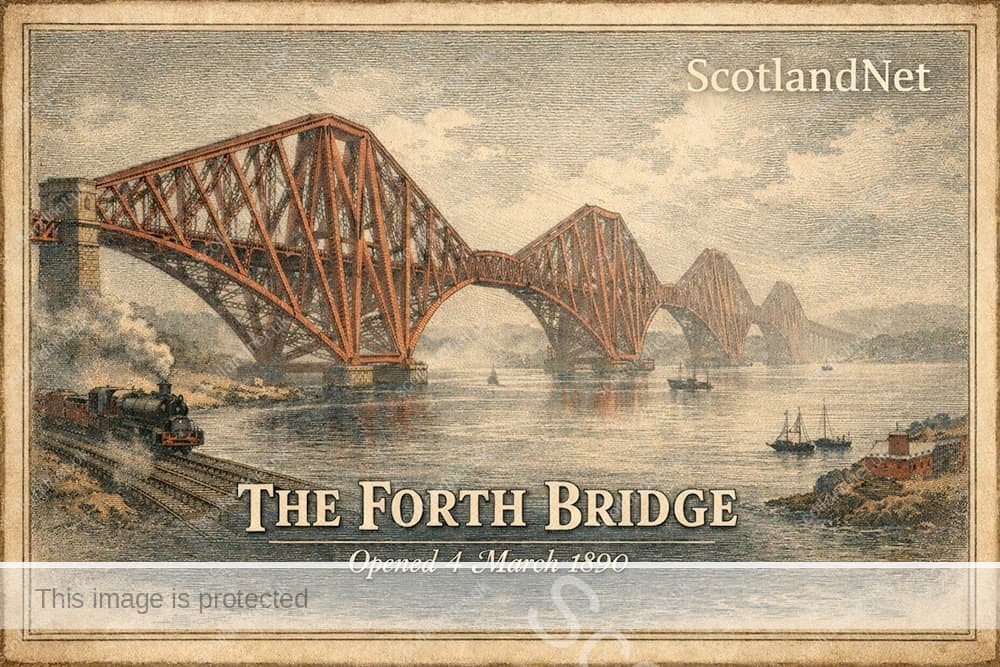
When was the Forth Bridge officially opened?
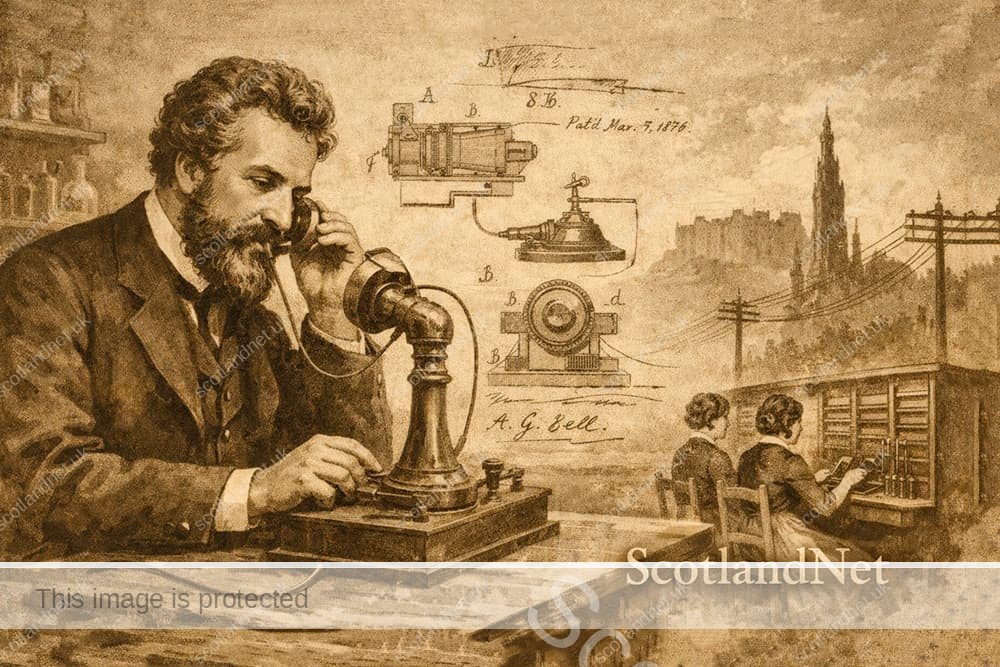
Alexander Graham Bell

Robert Burns

Joseph Black

John Buchan
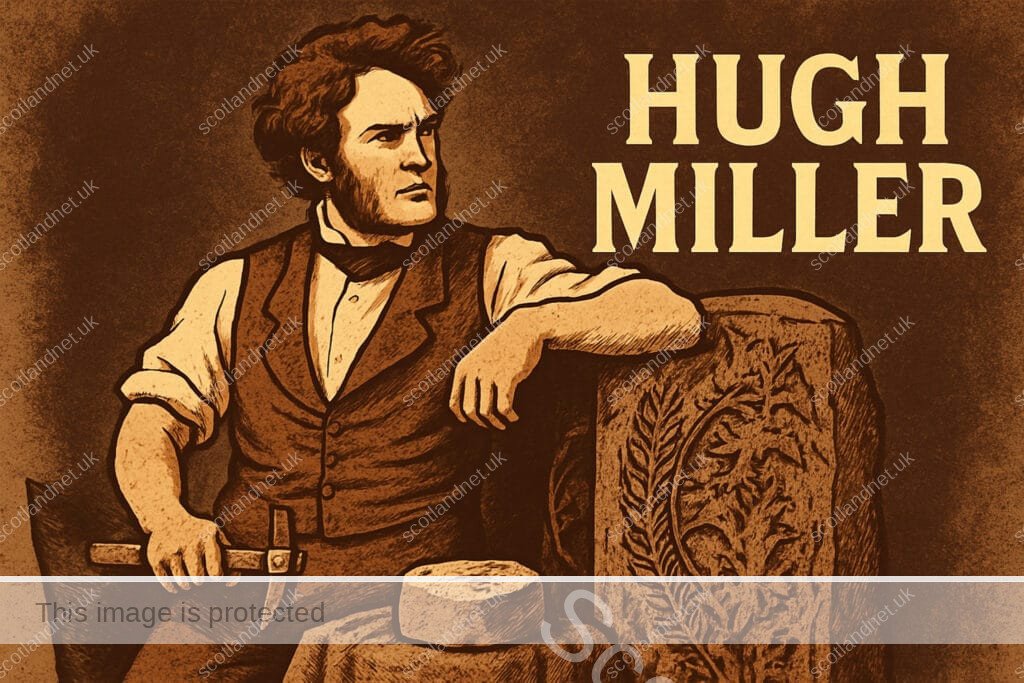
Hugh Miller

Categories
- Aberdeenshire
- Arts & Culture
- Community
- Education & Learning
- Environment
- Ephemera
- Football
- Glasgow
- Golf
- Government & Civic Life
- Groups and Clubs
- Healthcare & Wellbeing
- Historic Figures
- History & Heritage
- Islands & Coastlines
- Landscape & Environment
- Literature
- Media
- Museums & Collections
- Music
- Music & Song
- Nature & Wildlife
- Night Sky & Astronomy
- Public Services
- Questions
- Rivers, Lochs & Waterways
- Rugby
- Scottish Highlands
- Sport
- Theatre & Performance
- Travel
- Vintage Postcards
- Visitor Guides
- Visual Arts
- Volunteer & Emergency Services
- Walking Routes & Trails