
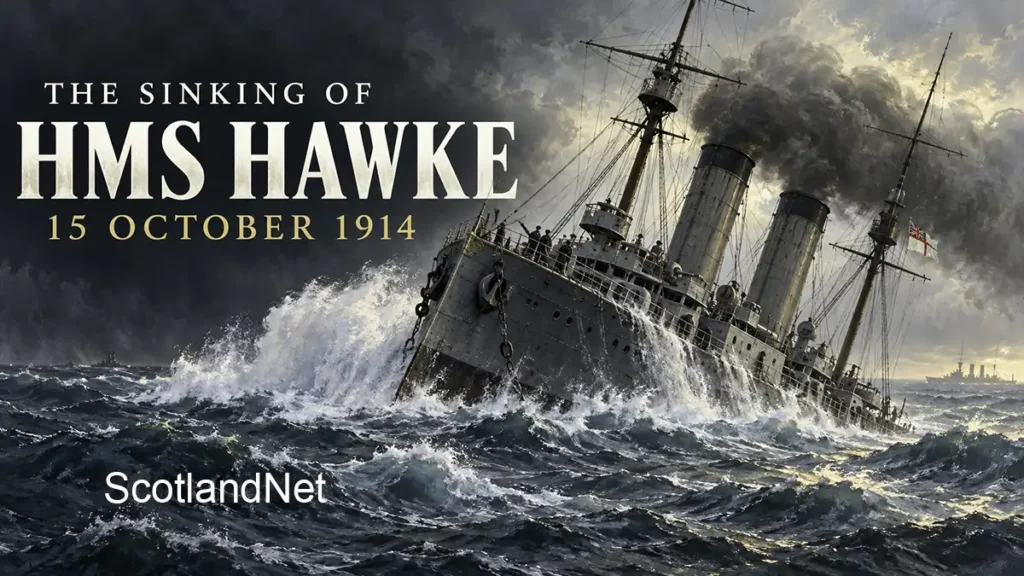
On 15 October 1914, just months into the First World War, HMS Hawke was torpedoed by a German submarine U-9 in the North Sea off Scotland. The cruiser capsized and sank within minutes, taking more than 524 men with her. Around 70 survived.
An ageing Edgar-class cruiser, Hawke was helping enforce Britain’s naval blockade of Germany. Her patrols between Scotland and Norway formed part of a wider effort to restrict shipping reaching German ports. On the day of the attack, she was approximately 80 miles east of Fraserburgh.
That morning, Hawke had fallen behind her squadron after stopping to collect mail from HMS Endymion. As she hurried to regain her position, a torpedo from U-9 struck. The speed of the sinking gave those aboard little opportunity to escape.
U-9 was commanded by Otto Weddigen, whose submarine had sunk three British cruisers the previous month. The loss of Hawke further demonstrated the danger submarines posed to large surface warships.
HMS Hawke – the wreck
For more than a century, the ship’s exact resting place remained unknown. In August 2024, researchers and divers from Lost in Waters Deep located a wreck 110 metres beneath the surface. The Royal Navy confirmed its identity as HMS Hawke that November.
Today, the wreck is a war grave: a lasting reminder of the men who never returned and of Scotland’s place in the history of the war at sea.
Share this page.
