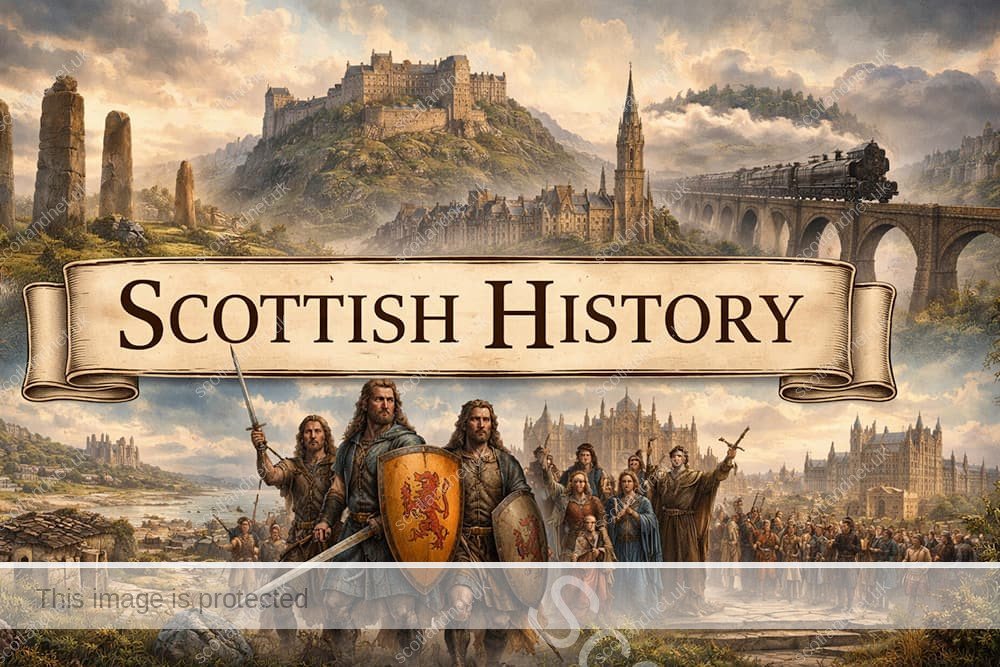
From Prehistoric Settlements to Contemporary Scotland

The history of Scotland extends over 10,000 years, beginning with the first hunter-gatherers who migrated after the retreat of the ice sheets and continuing to the political and cultural landscape of the present day. Over the millennia, the region has experienced the development of ritual landscapes, tribal societies, medieval kingdoms, religious transformations, industrialization, and constitutional change.
Each historical period has left enduring physical evidence, including stone circles, castles, churches, battlefields, and civic institutions, which continue to influence Scotland’s national identity.
Prehistoric communities constructed significant monuments, including Skara Brae and Maeshowe. The Roman Empire extended its reach as far north as the Antonine Wall, temporarily establishing the boundary of imperial authority. During the early medieval period, the Picts, the Gaels, and the kingdom of Alba emerged, followed by the Wars of Independence and the consolidation of the medieval Scottish monarchy.
The Reformation fundamentally altered religious practices and governance in Scotland. The 1707 Union redefined the constitutional structure, while the Scottish Enlightenment established the nation as a leader in intellectual and scientific advancement. Industrialisation transformed cities such as Glasgow and Dundee into major centres of shipbuilding, engineering, and trade. Scottish History in the twentieth century was marked by both conflict and renewal, ultimately leading to devolution and the creation of the modern Scottish Parliament.
This section examines these historical developments through a structured timeline, thematic analyses, and profiles of influential individuals. By exploring prehistoric settlements, medieval governance, Enlightenment thought, and contemporary political change, the narrative presents Scotland’s past as a continuous, complex, and interconnected history that remains dynamic.
Scottish History & Heritage Articles
-
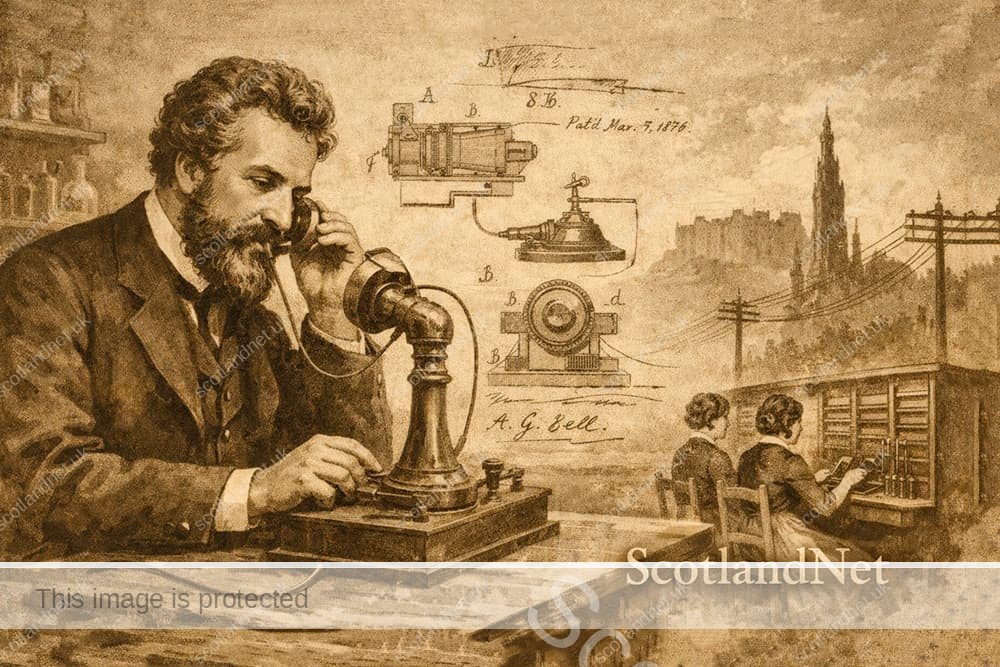
Alexander Graham Bell
Born in Edinburgh in 1847, Alexander Graham Bell pioneered the invention of the telephone and helped reshape global communication. Rooted…
-
Balmoral Castle – Royal Residence in Royal Deeside
Balmoral Castle is the private Highland residence of the British Royal Family, located in Royal Deeside, Aberdeenshire. Purchased in 1852…
-
Eilean Donan Castle
Scotland’s most romantic castle and Wedding Venue
-
Hugh Miller
The self-taught stonemason who became one of Scotland’s most influential writers and geologists.
-
John Buchan
Born in Perth in 1875, Buchan was a man of many chapters: bestselling novelist, war propagandist, Member of Parliament, and…
-
Joseph Black
Joseph Black (1728–1799) was a pioneering Scottish chemist best known for discovering carbon dioxide and developing the ideas of latent…
-
Local History Groups & Societies
Local history groups are truly remarkable resources! They can help you uncover your family roots, explore towns and villages.
-
Scotland’s World Heritage Sites
Explore Scotland’s six UNESCO World Heritage Sites — from ancient Orkney to the iconic Forth Bridge. Discover the stories, landscapes,…
-
Skara Brae
Skara Brae is one of the best-preserved Neolithic settlements in Europe. It sits on the west coast of Mainland Orkney,…
-
The Broomielaw
Once the beating heart of maritime Glasgow, the Broomielaw was where steamers puffed their way up the Clyde, docking amid…
-
The Devil’s Porridge Museum
The Devil’s Porridge Museum tells the dramatic story of the vast WWI munitions factory that once spanned the fields of…
-
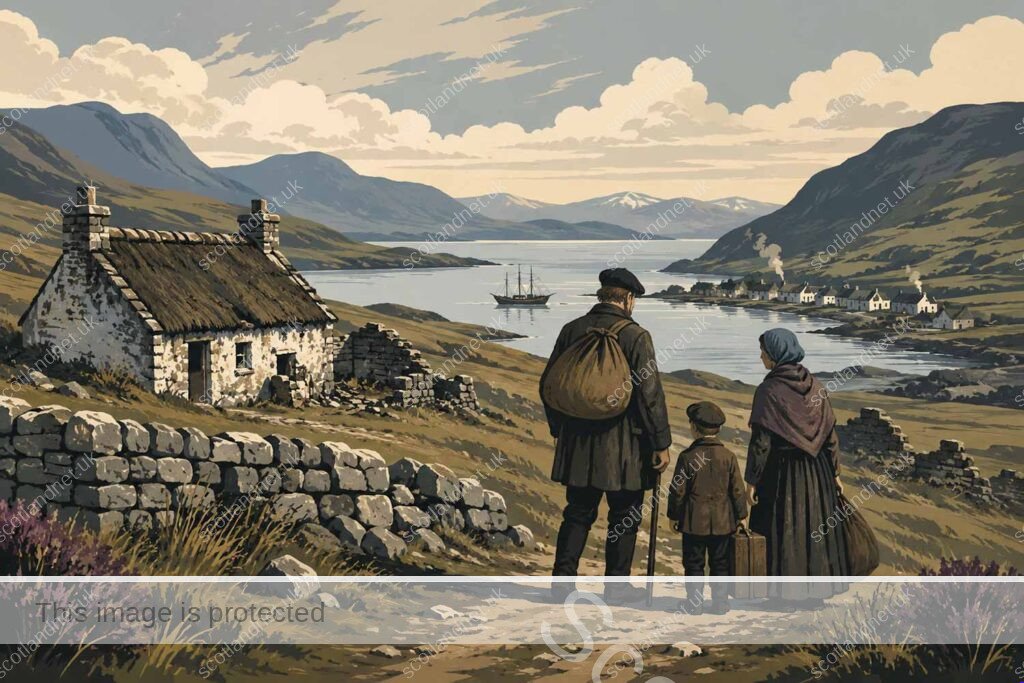
The Highland Clearances
A Complex Chapter in Scotland’s History Few events in Scottish history stir up stronger feelings than the Highland Clearances. From…
-
What was the 1745 Rebellion?
The Jacobite Rebellion of 1745 wasn’t just a Highland affair—it was the final, dramatic attempt by the exiled House of…
-
When was the Battle of Culloden fought?
The last pitched battle on British soil took place on 16 April 1746.
-
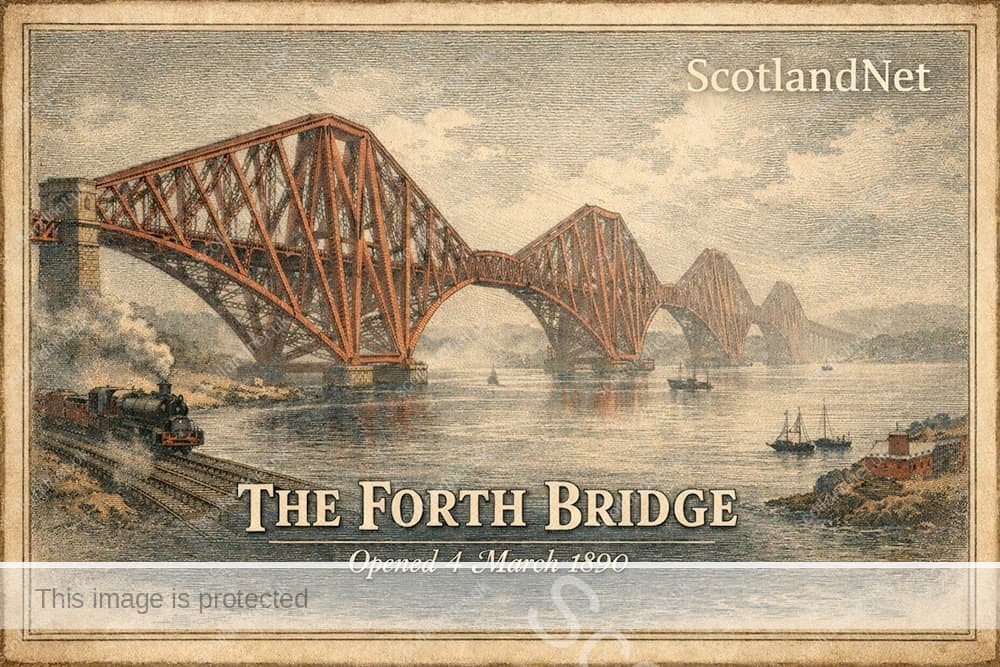
When was the Forth Bridge officially opened?
Opened on 4 March 1890 by the future Edward VII, the Forth Bridge remains one of Scotland’s greatest engineering achievements…